
info[at]ictm.ie
info[at]ictm.ie
From fairy forts to stories of noble warriors, these myths tell of Ireland's history and the significance placed on storytelling. Here are some of the intriguing facts and myths that will speak to the soul of Irish folklore.
The very nature of Irish folklore binds the real landscape, ancient oral traditions, and belief in the supernatural, while their existence is still very much influenced by these elements in their everyday life and cultural identity.
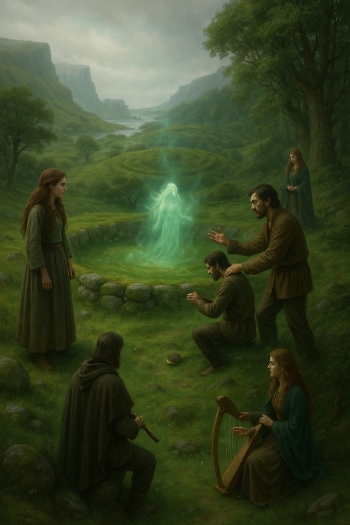
Irish mythology is much more than that and lives in the daily customs, landscape beliefs, and superstitions being silently passed down from generation to generation. These stories strangely stitch towhther the people of Ireland with the land and their history.
Nothing else quite stokes the Irish imagination than fairy forts, a belief so ancient that perhaps even some mysteries ought to remain excluded from the domain of science.
Fairy forts in Ireland rarely remain attractions alone. Many farmers and landowners go to great lengths not to interfere with these earthworks for fear that their actions may disturb the "Good People" or fairies. These circular earthworks, commonly dating back to the Iron Age, are thought to be entrances into the other world.
The most noticeable and lasting superstition in Irish culture acts as a bridge between folklore and everyday life. They show how some older beliefs colored present-day practices.
Irish superstitions are largely drawn from folklore and beliefs involving unseen forces on luck. A solitary magpie, so the belief goes, carries the bad omen; a pair might bring joy. To happen to tip a chair accidentally spells doom, whereas finding a coin is deemed a slight blessing.
In olden days, there was a story about a giant creating the causeway so that he might meet his rival in Scotland.
Landscapes in Ireland are littered with myths and legends. Popular landmarks across Ireland are said to have been shaped by gods, giants, or heroes.
One of the best-known fables of Ireland is very much that of Tír na nÓg or the Land of Eternal Youth. Oisin travels with a fairy princess to the other world but returns after many centuries into a changed world. The story of Giant's Causeway is its equal, for it is said to be made as a challenge by the giant Fionn mac Cumhaill to his Scottish rival.
Irish folklore has been either romanticized or looked down upon or completely misunderstood. When we can distinguish reality from symbolism, we become able to appreciate its vast depth of texture.
Irish mythology comes from a deep-rooted pre-Christian belief, yet the monuments marking the stories have traced their continual evolution across the ages.
While a number of characters found their origins in pre-Christian belief systems, their versions-extant were mostly written down by Christian monks, who often adapted the tales. So, there is a layered mythology: ancient spirituality; moral storytelling; and some vestiges of early Irish history.
The media presents leprechaun as a happy mascot by the way. But the lore provides a somewhat deeper backdrop.
Now commercial, the leprechauns started their life in folklore. Fairies were solitary beings: mischievous, they made shoes and guarded their hidden treasure. They stood for a spirit of trickery common to many cultures: witty yet unpredictable and never to be taken lightly.
Some would say that folklore belongs to days of old; in Ireland, it still walks on the grounds of traditions, language, and local beliefs and customs.
Folklore in Ireland is a living being. While alteration in beliefs about fairy forts or customs pertaining to the season fosters traditions, especially rural, at times even policies are created around them. Changing folklore becomes an art standing still as a link in culture.
Irish folklore is an amalgamation of oral tradition, mythology, and living superstitions. From the tales of Tuatha Dé Danann and Cú Chulainn to those of fairy forts and leprechauns, folklore speaks of how imagination and heritage have birthed Ireland's identity. These days, folklore never seems to fade away but rather continues with this inspiring urge to remind us that behind each story lies the memory of the first person who told the story.
Subscribe Our Newsletter
Copyright © ictm.ie, 2026. All Rights Reserved.